


















































ANSI Z87.1 · Prescription Guide
ANSI Prescription Safety Glasses: Lenses & How to Order
Real prescription, real Z87.1 protection, lenses cut in our U.S. optical lab, set in genuinely rated frames, every Rx checked by our team before production.
Shop prescription safety glasses →Yes, you can get safety glasses with your prescription that still meet ANSI Z87.1 and OSHA safety standards, as long as the lenses are made with ANSI Z87.1-compliant material and the frames are also compliant. That’s what SafetyGearPro gives you: your prescription lenses cut in our U.S. optical lab, set in genuinely Z87-rated frames, with every prescription checked by our team before production. This guide covers which lens options suit which prescriptions, what changes when your prescription is strong, and exactly how to order. New to the markings and ratings? Read the general ANSI safety-glasses guide first, then come back for the prescription side.
What makes a prescription pair “ANSI rated”?
A prescription pair of frames is ANSI-rated when both the frame and the finished prescription lenses meet ANSI/ISEA Z87.1; the frame carries the Z87 (or Z87+) mark, and the lenses are made to the standard in an impact-rated material. A regular optical frame with your prescription isn’t safety eyewear, even with polycarbonate lenses, because the frame itself has to be tested and marked. Every frame in our ANSI prescription safety glasses selection carries its rating, and we check the prescription against the standard before the lenses are cut. Look for the higher Z87+ rating if your work environment involves flying debris or particles to provide increased protection against high-velocity impacts.
Lens material options for prescriptions
Your prescription strength and the hazards you face in your work environment drive the lens choice: polycarbonate is the safety default, a high-index lens is a thinner, lighter option for strong prescriptions, photochromic lenses are the best option when you are moving in and out of the sun, and progressives or bifocals correct both near and far vision in one pair. Here’s how to choose. For a fundamental guide to the most common lens materials, see the general guide’s lens section:
- Polycarbonate — the standard impact-rated safety lens; it covers most prescriptions and most jobs.
- High-index (1.67 / 1.74) — for strong prescriptions, it keeps the lens thin and light. See high-prescription glasses.
- Photochromic — darkens outside, clears inside (the V mark); good for moving between shop and yard.
- Progressive / bifocal — near and far in one lens. Progressives need an accurate segment-height measurement, and a quality progressive tier is more forgiving when that measurement is uncertain.
- Polarized safety sunglasses — glare control for outdoor work, in Z87+ frames.
Why frame fit matters more with a prescription
A strong prescription in a high-wrap frame can exceed the manufacturer’s parameters for what the lab can safely cut for that frame. If there is too much wrap or base curve plus on a frame, a strong prescription can create distortion or a prism effect, and the lenses can’t be made to the prescription at all. Therefore, choosing the right frame for your prescription is a critical decision, not just a style choice. Frame-prescription incompatibility is a leading source of fit-related returns in prescription safety eyewear: a frame that looks right but doesn’t suit your prescription. That’s why SafetyGearPro reviews prescription-to-frame compatibility before production and verifies every prescription by our team rather than auto-processing it.
The part that saves you a return
Our U.S. optical lab reviews frame-prescription compatibility before manufacturing begins. Rather than relying on automated processing, an optical specialist manually verifies your prescription. If your selected frame is incompatible, our customer service team will contact you directly to help you select a suitable alternative before crafting your custom lenses.
How to order prescription safety glasses
Four steps: pick an ANSI-rated frame, choose your lens type and coatings, enter or upload your prescription, and give us your PD. In detail:
- Pick a Z87-rated frame from prescription safety eyeglasses — filter by Z87+ if you need high impact.
- Choose your lens — single-vision, bifocal, or progressive; material (polycarbonate as standard, high-index for a strong Rx); and coatings like anti-fog, anti-scratch, or a tint.
- Enter your prescription from your most recent eye exam (usually valid about one to two years). Upload a photo of it and our team verifies it before production.
- Give us your PD — the distance between your pupils, which centers the lenses. Don’t have it? Send it after you order; we hold production until we have what we need to make the pair right.
Every order is checked by our team in our U.S. optical lab before the lenses are cut. If we make your prescription wrong, we remake it free. Fit or change-of-mind is covered by our 45-day return window (lens fees may apply). Prescription safety glasses are FSA/HSA eligible, and U.S. shipping is free over $99.
Strong prescriptions: what changes
A strong prescription, plus or minus power greater than 4.00, or a lot of astigmatism, calls for thinner high-index material to stay light, and it fits best in a moderate-wrap frame rather than an aggressive wraparound frame. A high prescription in the wrong frame doesn’t fit the frame correctly, distorts your vision at the edges, or can’t be made to safety standards at all. Start by selecting frames suited to it; see high-prescription safety glasses. If the frame you pick won’t work with your prescription, our team reviews compatibility and contacts you before making the pair. That review is what keeps a strong prescription from turning into a return.
Premium national brands and value-driven options
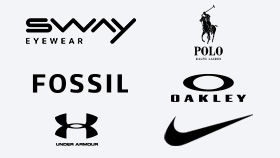
SafetyGearPro is an authorized dealer for all of the industry-leading safety frame brands. But getting ANSI-rated protection doesn’t have to cost a lot. Any frame that carries the Z87 mark meets safety standards. For value, see prescription safety glasses under $39. The top safety brands include:
Prescription safety eyewear by job
The right Rx setup depends on the work — the lens material, tint, coating and frame that suit a welder aren’t what a lab tech needs. These guides cover the prescription angle for the most demanding jobs:
- Welding — filter shades and where Rx fits under the helmet.
- Tactical & shooting — ballistic platforms and Z87+ Rx inserts.
- Healthcare — splash, bloodborne pathogens and clinical Rx.
- Laboratory — chemical splash, D3 goggles and cleanrooms.
- Electrical — non-conductive frames and NFPA 70E arc flash.
- Heavy-duty industrial: mining, oil & gas, construction, manufacturing, agriculture, automotive and food processing.
Caring for prescription safety glasses
Care is the same as for any ANSI lens. See the full routine in the care section of our general ANSI guide. One prescription-specific note: keep your prescription current. An out-of-date prescription is the most common reason a correctly made pair still doesn’t feel right.
Frequently asked questions
Can you get prescription safety glasses that are ANSI-rated?
Yes. When the frame carries the Z87 mark and the prescription lenses are cut to Z87.1 in an impact-rated material, the pair is ANSI-rated. SafetyGearPro verifies every prescription before production.
How do I order prescription safety glasses online?
Pick a Z87-rated frame, choose your lens type and coatings, enter or upload your current prescription, and give us your PD (pupillary distance). Our team verifies the prescription in our U.S. lab before cutting the lenses.
What’s the best lens for a strong prescription?
High-index material (1.67 or 1.74) keeps a strong prescription thin and light; polycarbonate is the impact-rated default for most prescriptions. See our high-prescription options.
Are prescription safety glasses FSA/HSA eligible?
Yes, prescription safety eyewear is FSA/HSA eligible. Keep your itemized receipt for reimbursement.
Can I get progressive or bifocal safety glasses?
Yes. Progressive and bifocal prescriptions can be made in ANSI-rated safety lenses; progressives need an accurate segment-height measurement for optimal vision.
What if I don’t know my PD?
Order anyway and send your PD afterwards. Our customer service team can help you get the PD, either from your optician or DIY measurement tools. We hold production until we have the measurement, which is critical to fabricating your prescription lenses accurately.
What happens if my prescription comes out wrong?
If we make your prescription wrong, we remake it free. Fit or change-of-mind is covered by our 45-day return window.
Can I just use my regular prescription glasses as safety glasses?
Absolutely not! Everyday glasses can shatter on impact and the frame isn’t Z87-rated, so they don’t count as eye protection. You need your prescription in a frame and lenses made to ANSI Z87.1 standards, which is SafetyGearPro’s specialty since 2010.
Can I wear contact lenses instead?
Contacts correct your vision, but they aren’t impact protection. In a hazard area you still need safety eyewear. If you want to wear your contacts, the solution is a non-prescription pair of safety glasses that you wear with your contacts.
Can you make safety glasses for astigmatism?
Yes. Astigmatism is the cylinder and axis on your prescription, and we cut it into impact-rated lenses from your full prescription. A strong cylinder can affect which frames suit you, so we check compatibility before production.
Why do my safety glasses fog up, and how do I stop it?
Fogging comes from heat and humidity, moving between temperatures, sweating, or wearing a mask or respirator. An anti-fog coating is the fix, and it’s worth adding if you fog up regularly. See our anti-fog options.
Are prescription safety glasses heavier than regular glasses?
A little, because the lenses are impact-rated. Polycarbonate and Trivex are both light, and a high-index lens keeps a strong prescription from getting thick and heavy, so the extra weight is slight and most wearers adjust quickly.
Could they give me headaches or eye strain?
That’s almost always a fit or prescription issue, such as an out-of-date prescription, the wrong PD, or a frame that doesn’t sit right. We verify every prescription before production to head that off; if a new pair feels off, tell us.
How long do prescription safety glasses take to make?
Your lenses are cut to order in our U.S. optical lab, which typically takes about 10 business days before they ship.
Can you put safety lenses in my own frames?
The frame itself has to be ANSI Z87-rated to count as safety eyewear, so most everyday frames don’t qualify. Start from a rated frame in our selection. That’s what makes the finished pair compliant.
Why buy dedicated prescription safety glasses instead of an over-the-glasses (OTG) cover?
OTG covers go over your regular glasses, but they tend to fog, slip, and interfere with a mask or respirator seal. A dedicated prescription pair fits better, gives you full peripheral vision, and is one thing to put on instead of two.
What should I ask my eye doctor before ordering?
Ask for your full prescription including your PD (pupillary distance), plus any prism or special instructions. If you want progressives, mention it so the doctor notes what you need for an accurate fit.
Ready to order?
Shop prescription safety eyeglasses or our ANSI prescription safety glasses selection. New to the ratings? Start with the general ANSI safety-glasses guide.