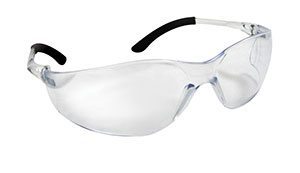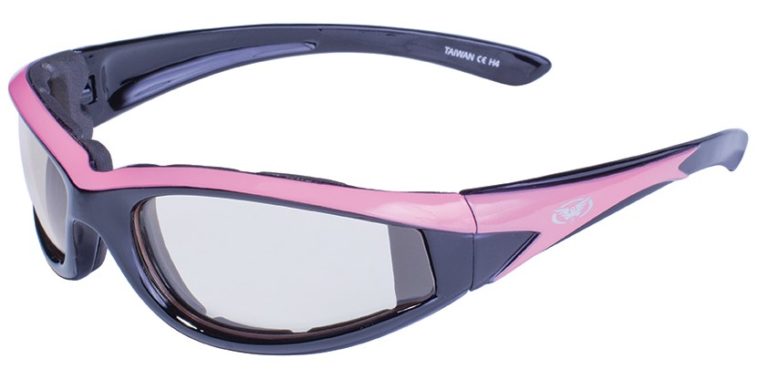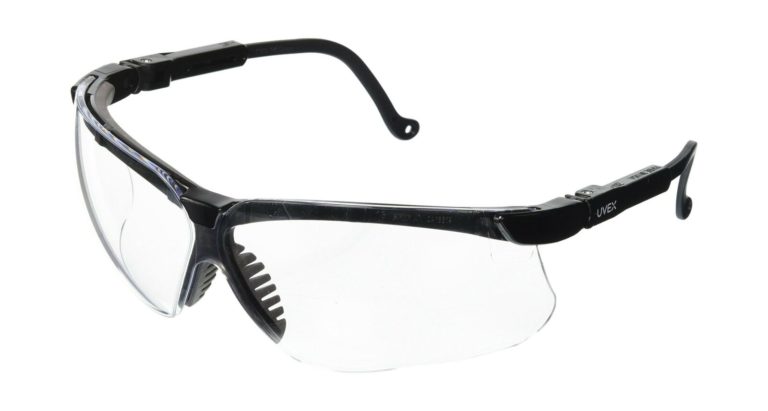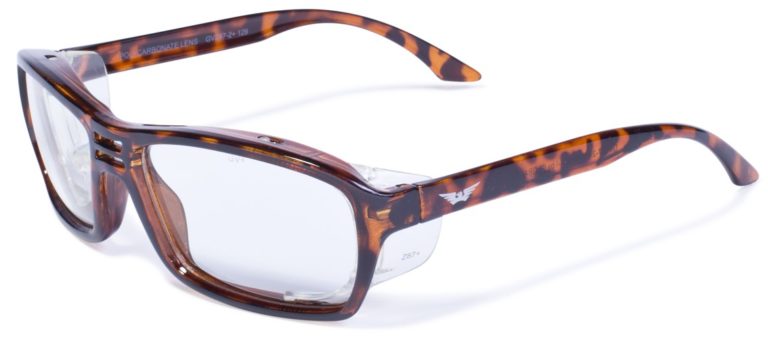









































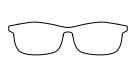
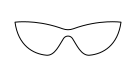























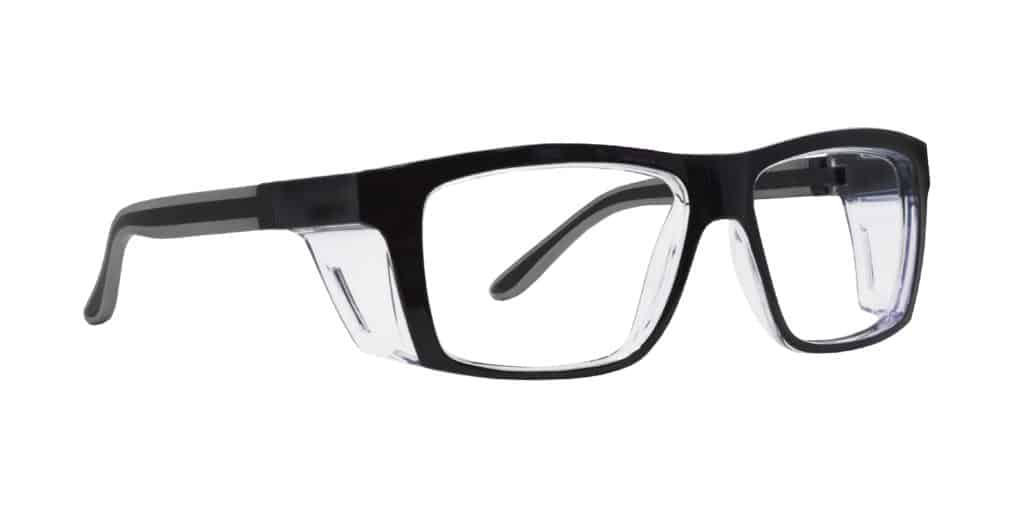
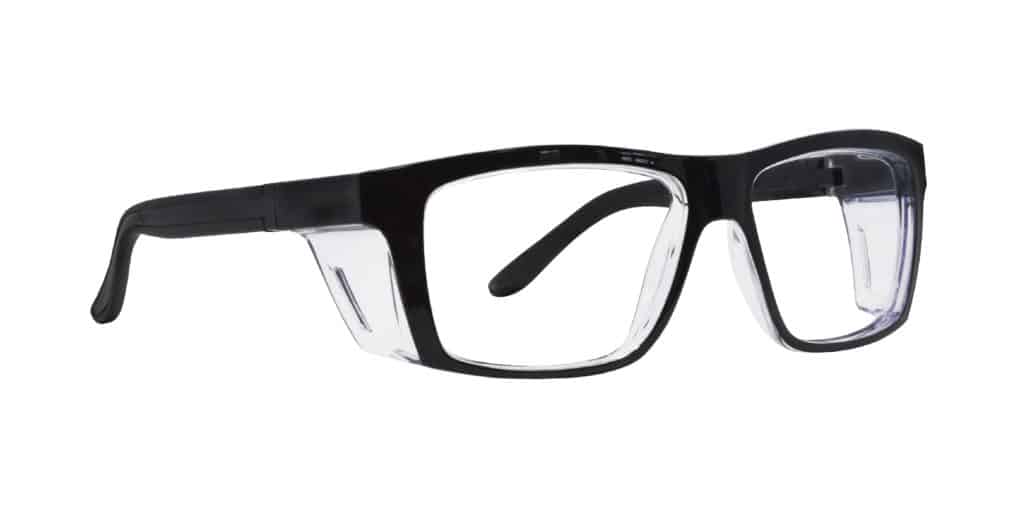
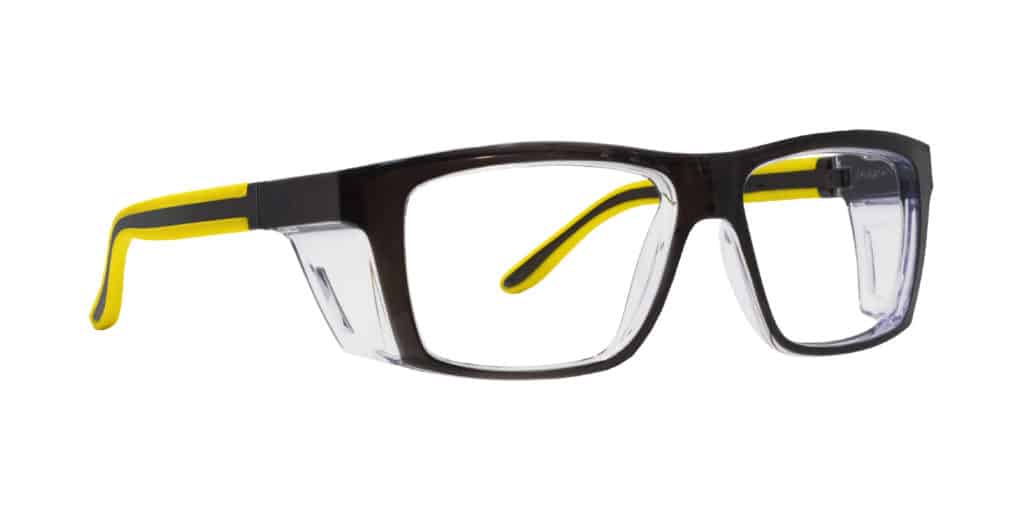
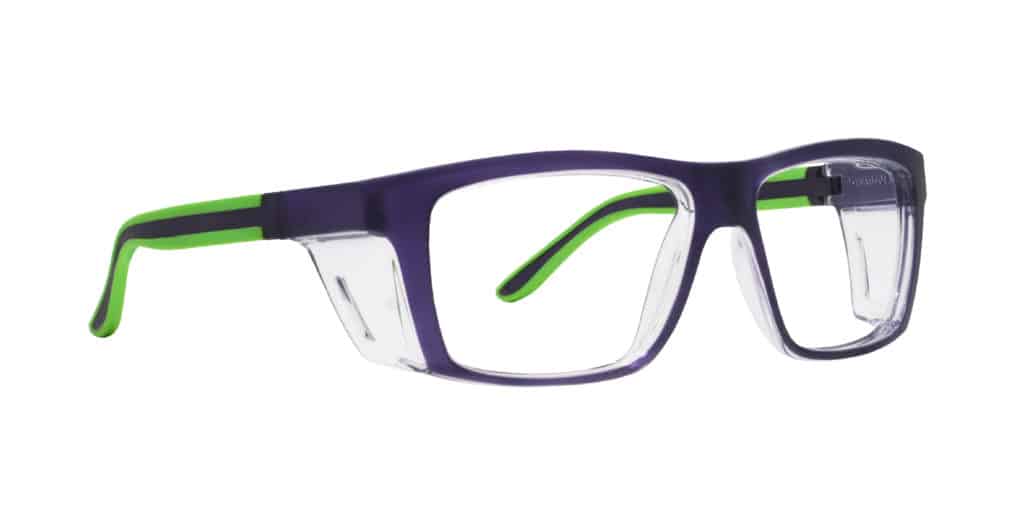
ArtCraft WF974 Non-Conductive Prescription Safety Glasses (ANSI Z87.1, Wider Side View)
$40.88
Return & Shipping DetailsMeets ANSI Z87.1-2010 standards.
Description
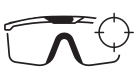
The WF974 is the ArtCraft purpose-built for electrical-trade work. Zero metal anywhere in the frame, zero metal in the lens, lens-and-temple geometry engineered for wider side view. Integrated shields, ANSI Z87.1 industrial cert, full Rx range. The frame for crews who track conductors at the edge of their peripheral vision and don’t need metal hardware near energized work.
Why a ‘non-conductive’ frame is its own category
Electrical-trade workers — electricians, low-voltage technicians, utility linemen, industrial-control technicians, telecom crews — operate in environments where metal hardware on the body can become a conduit. Most industrial safety frames have metal somewhere: hinge pins, nose-pad screws, temple cores. In ordinary work that doesn’t matter, but the calculation changes when you’re working near energized conductors or inside electrical enclosures. The WF974 was engineered to remove that variable entirely. The chassis is polyamide. The hinges are polymer. The nose pads are polymer. The lens is polycarbonate. There’s no metal anywhere in the frame for current to conduct through. That’s not a marketing claim — it’s the engineering specification.
What ‘wider side view’ actually means in fitting terms
Most industrial safety frames are engineered around a standard temple-meets-lens junction that creates a small peripheral blind spot. For most work that’s invisible. For electrical-trade work, where you’re often tracking the path of a conductor that exits your central vision and continues into your peripheral, that blind spot becomes a real visibility gap. The WF974’s lens housing extends slightly past the standard junction point, and the temple arm is offset slightly outward to keep it out of the wearer’s peripheral vision. The result is a measurable widening of the unobstructed visual field — useful for the specific kind of tracking work that defines this trade.
How the prescription work happens
Every WF974 prescription is cut at our US optical lab. Single-vision, bifocal, and progressive prescriptions are supported. The WF974’s lens housing has adequate vertical height for standard-corridor progressives — no short-corridor fitting needed. Polycarbonate is the standard lens material and is the right pick for this application because it carries no metal in its molecular structure (consistent with the non-conductive design philosophy). High-index 1.67 is available for stronger prescriptions. Anti-reflective and anti-fog coatings are optional add-ons.
- a wider side view range
- improved temple comfort
- reinforced and integrated side shields
- meets ANSI Z87.1-2010 standards
Additional information
| Product Type | Eyeglasses, Safety Glasses |
|---|---|
| Gender | Mens, Womens |
| Frame Color | Black, Purple |
| Frame Shape | Square |
| Frame Material | Plastic |
| Frame Feature | Lightweight, Rubber Temples |
| Bridge Width | 15 mm |
| Lens Width | 55 mm |
| Temple Length | 128 mm |
| Lens Height | 41 mm |
| Face Shape | Diamond, Heart, Oval, Pear, Round, Square |
| Activity | Commercial, Engineering, Industrial, Manufacturing, Work Safety |
| Collection | ArtCraft USA Workforce Safety Glasses |
| Prescription | Yes |
| Brand | ArtCraft |
| Product Color | Black, Purple |
Product Q&A
Frequently Asked Questions
What does 'non-conductive' actually mean for the WF974?
Zero metal in the frame and zero metal in the lens. The WF974 chassis is all-polymer construction — no metal hinge pins, no metal nose-pad screws, no metal temple cores. Combined with the non-conductive polycarbonate lens, the entire configuration is electrically isolated. For electrical-trade workers who occasionally cross into energized environments, that elimination of metal hardware is the safety case for picking this frame over a conventional industrial frame with metal hinges.
Is it arc-flash rated?
ArtCraft does not publish a specific arc-flash rating for the WF974. The all-polymer non-conductive build is the primary safety case, and it covers general electrical-trade work in non-arc environments. For arc-flash specifically, your safety officer needs to confirm with your facility’s arc-flash boundary calculation whether the WF974 is approved for the specific energy class you operate around. We can supply ArtCraft’s full data sheet on request — call the line at the top of the page.
What does the 'wider side view range' claim refer to?
The WF974’s lens-and-temple geometry is engineered to push peripheral vision farther out than typical industrial frames. The lens housing extends slightly beyond the standard temple-meets-lens junction, and the temple is offset to keep the temple arm out of the wearer’s peripheral vision. The practical effect is a measurable improvement in side-vision angle — useful for electrical work where you’re often tracking conductors at the edge of your visual field. The integrated side shields are flush to the housing rather than projecting inward, so they don’t recreate the peripheral blockage they’re protecting against.
How does the WF974 compare to ArmouRx 6008 for electrical work?
Both are non-conductive polyamide construction. The differences: the ArtCraft WF974 explicitly markets the non-conductive feature and pairs it with the wider side-view geometry; the ArmouRx 6008 is a more generic industrial frame that happens to be non-conductive. If electrical-trade work is your primary use case and peripheral vision matters, the WF974 is the more purpose-built option. If you need a corporate-program-friendly frame that happens to also be non-conductive, the ArmouRx 6008 has broader program approval.
Does it accept progressive lenses?
Yes. Single-vision, bifocal, and progressive prescriptions are all supported. The WF974’s lens housing has adequate vertical height for a standard-corridor progressive design, which means you don’t need the short-corridor fitting that smaller frames require. If you’ve worn progressives before, the transition to the WF974 typically takes 3–5 days rather than the 2 weeks that compact frames need.
Reviews
Customer Reviews
Related Products