




















































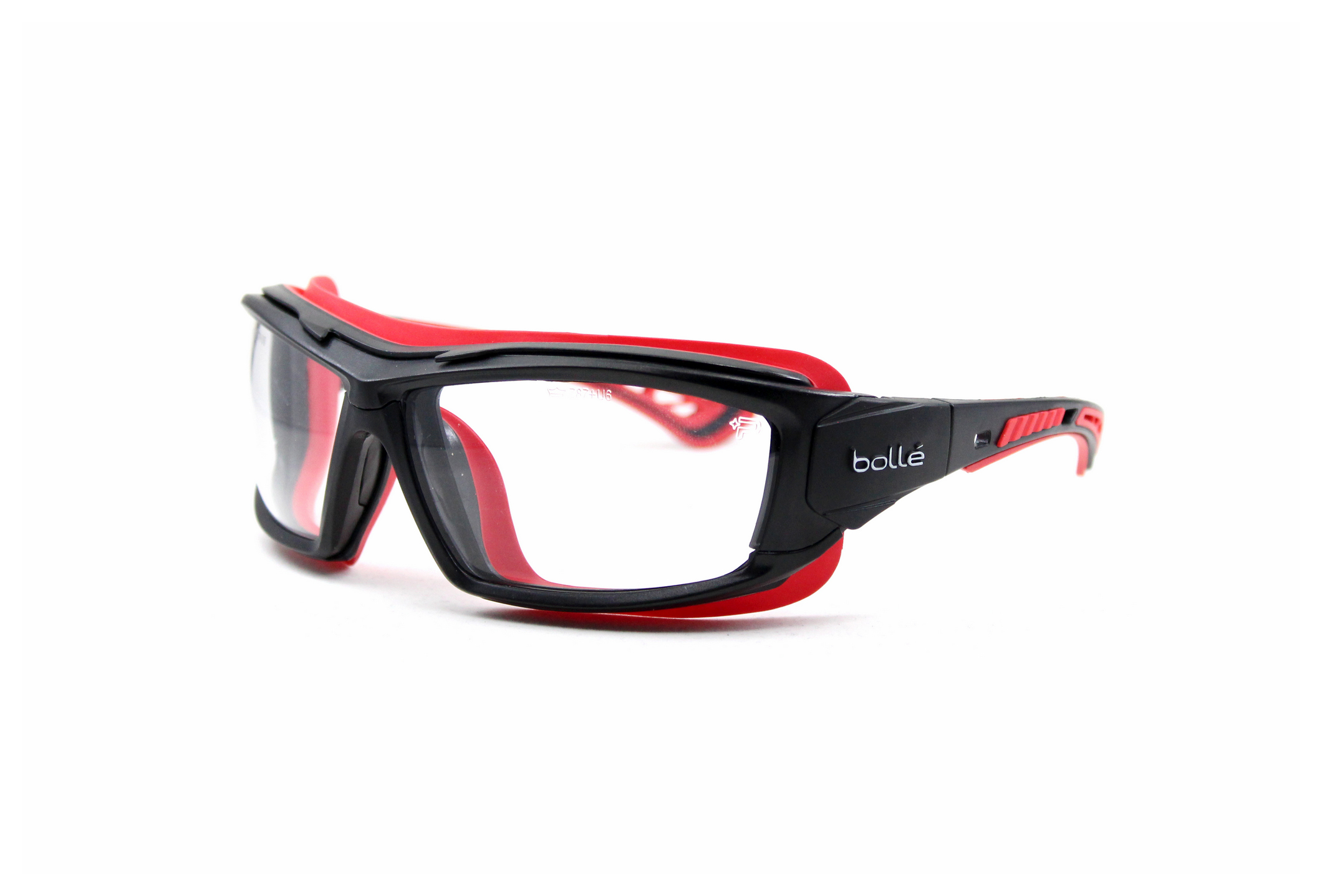
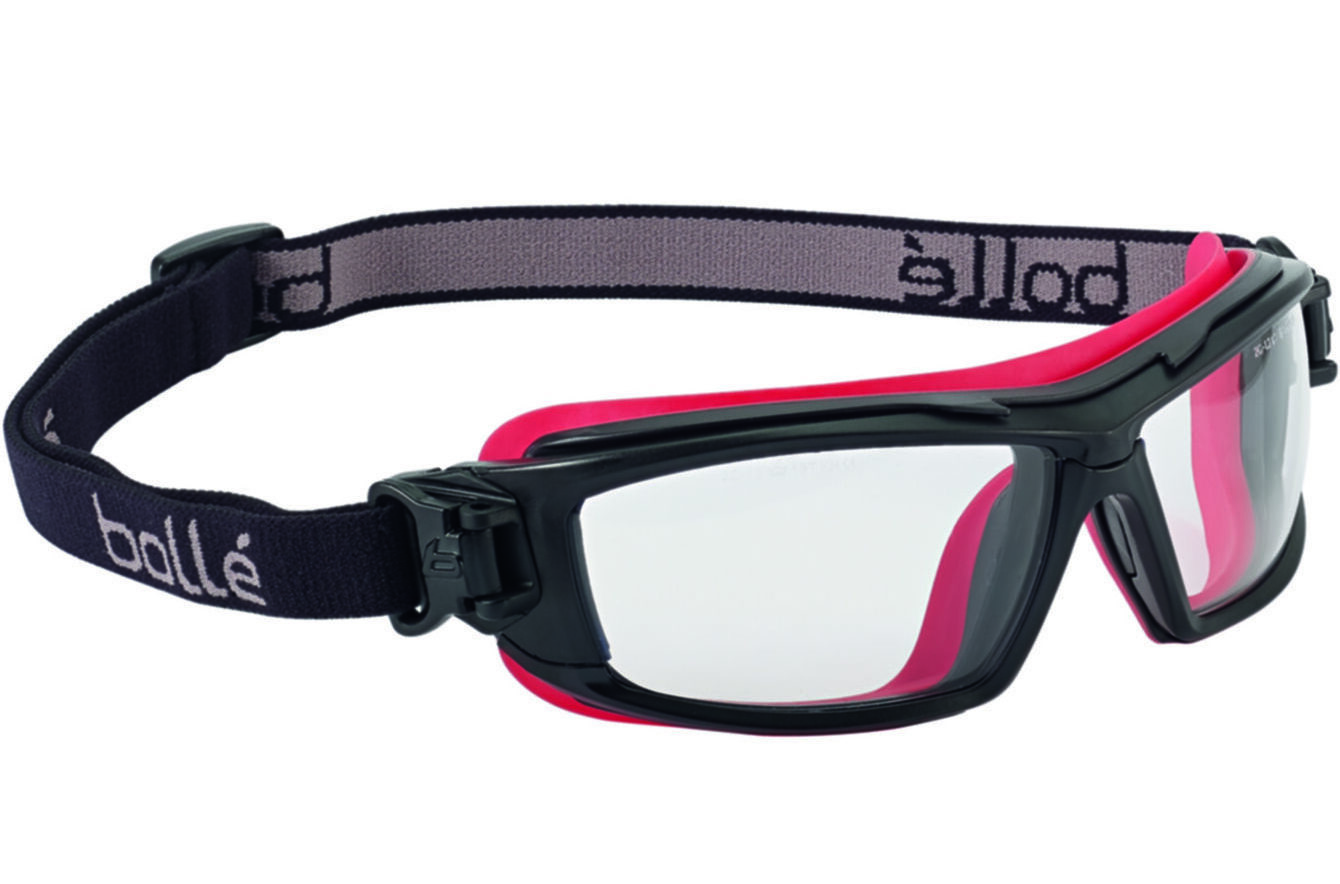
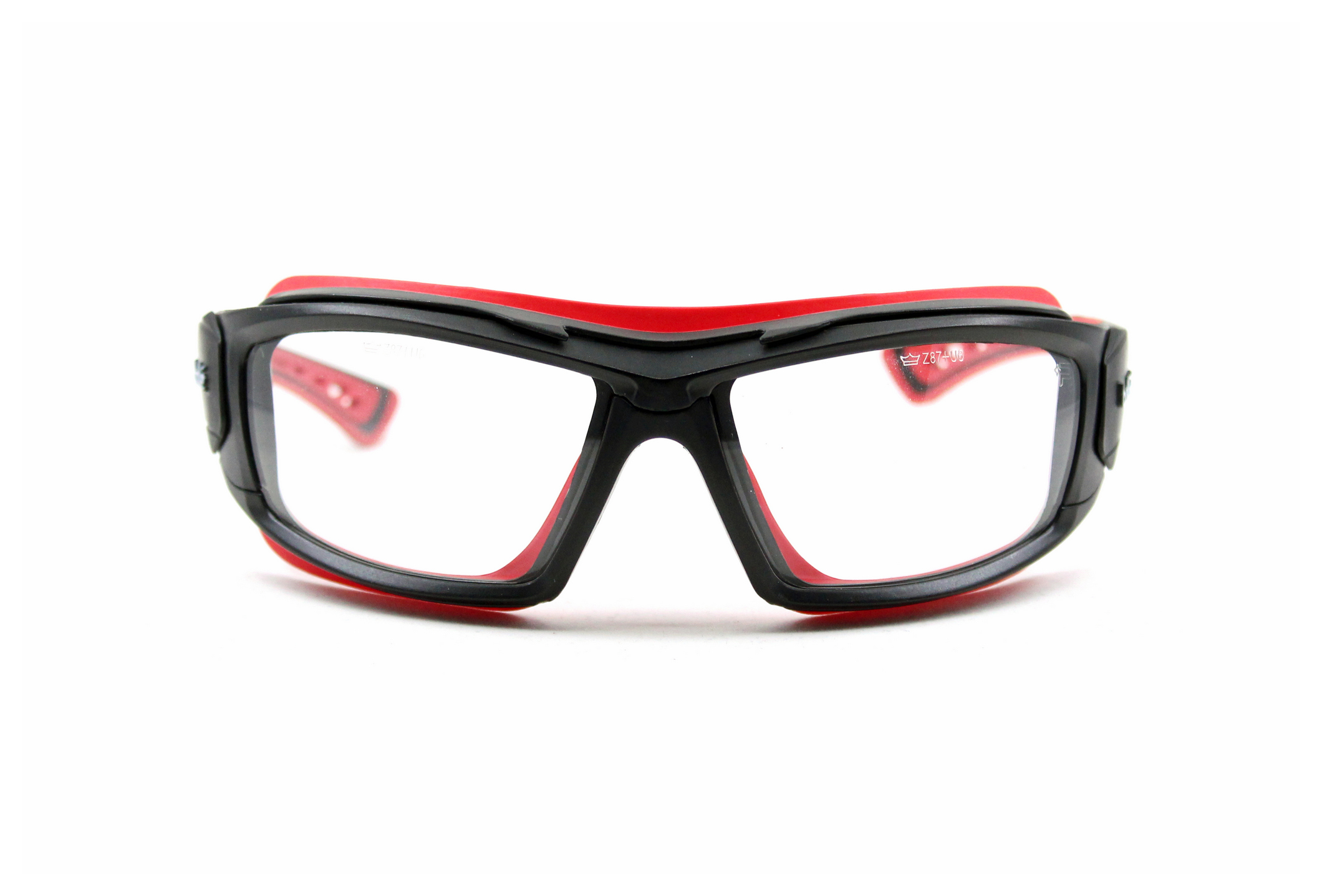
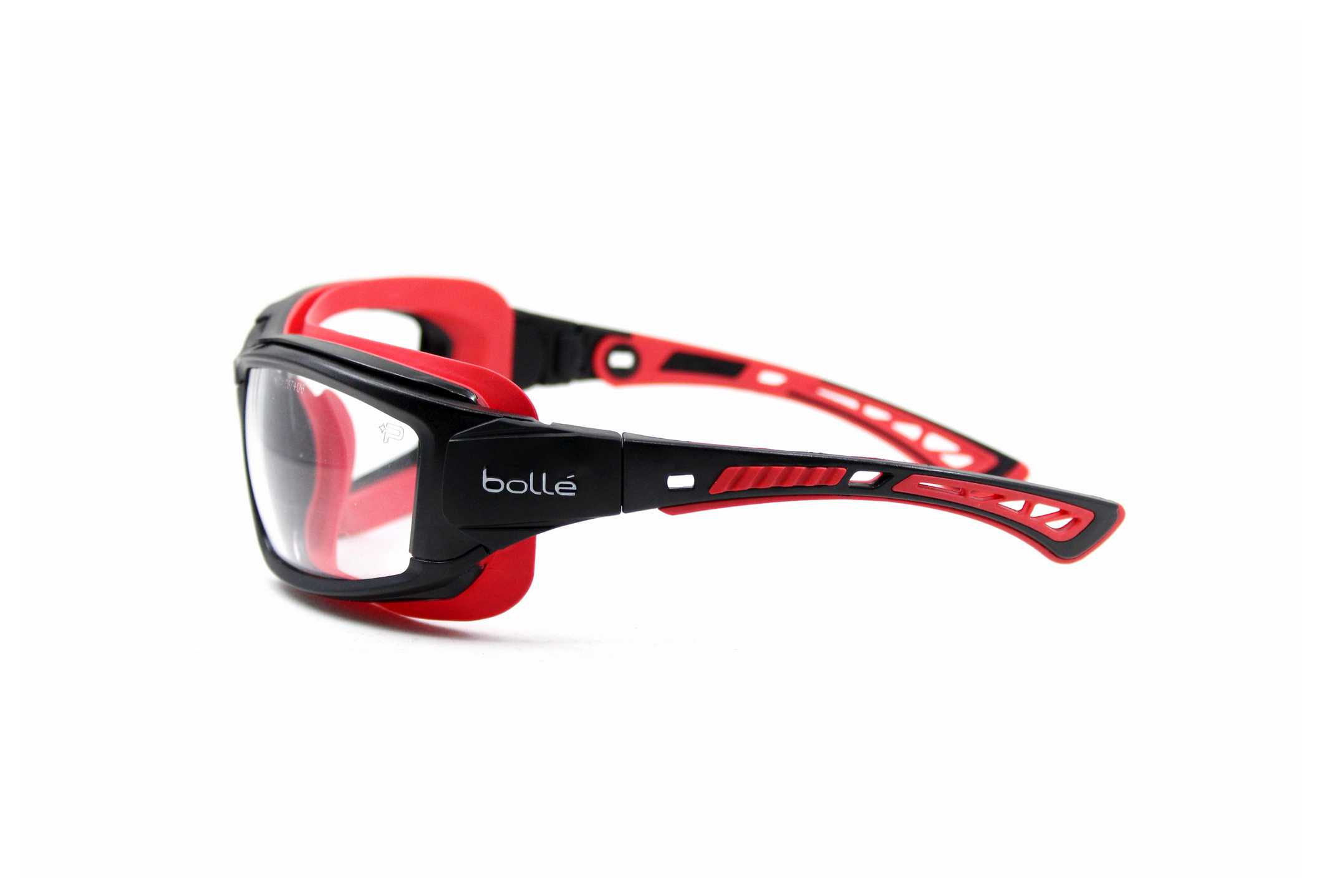
Bolle ULTIM8 Convertible Prescription Safety Goggles (ANSI Z87.1 + EN 166 D3/D4/D5)
$39.00
Return & Shipping Details

Our #1 best selling safety goggles
This frame cannot accommodate a RX higher than +/-3.00
This frame can only accommodate a Pupillary Distance (PD) of 64mm and above
RX lenses are NOT Interchangeable. The lens tint shown here is only available with non rx lenses if choosing a rx lens you must pick a tint that is available in step 4.
Description
The ULTIM8 is one frame that does two jobs. Strap on the temple arms and it’s a wraparound safety glass. Swap to the elastic strap and it’s a sealed goggle with a TPR-foam gasket and certified D3/D4/D5 ratings. Same lens, same prescription, same optical centers across both modes.
Why convertible eyewear is its own category
Most jobs that require eye protection require it in one mode. Lab work needs glasses; chemical splash work needs goggles; mechanical assembly needs glasses; grinding needs goggles. Some jobs cross between modes during a single shift — a lab tech who moves from analytical bench to fume hood, a food-processing engineer who walks from instrumentation room to active production line, a mechanic who breaks from assembly to a parts wash. For those crossing-modes shifts, swapping eyewear costs time and risks compliance gaps. The ULTIM8 architecture exists to solve that crossover problem with a single chassis.
What the EN 166 D-ratings actually cover
EN 166 is the European secondary protection standard, and D3, D4, and D5 are its splash-and-particulate sub-ratings. D3 covers liquid droplets and splash — chemical work, food processing, fluid handling. D4 covers large dust particles — woodworking, mechanical grinding, demolition. D5 covers fine dust — agricultural, pharmaceutical, ceramic, cement. The ULTIM8 in goggle mode carries all three. Most US-only goggle frames stop at the ANSI Z87.1 D3 splash rating; the EN 166 sub-ratings are a more granular spec, and they matter when your safety officer is verifying compliance with a specific contaminant in your environment.
How the prescription cut works across both modes
The lens housing on the ULTIM8 has a moderate curvature — less aggressive than a tactical-shooting shield, more pronounced than a flat industrial frame. That moderate curve is what makes it possible to cut a ground-in prescription that holds optical alignment across both glass-mode and goggle-mode conversions. Polycarbonate covers most working-adult prescriptions; high-index 1.67 is available for stronger scripts. Anti-fog coating is recommended on this frame because the goggle mode runs warmer than the glass mode, and the frame’s ventilation is designed for splash protection rather than airflow.
Additional information
| Product Type | Goggles, Safety Glasses |
|---|---|
| Brand | Bolle |
| Frame Material | Plastic |
| Frame Shape | Wraparound |
| Gender | Mens |
| Prescription | Yes |
| Rim Type | Full Rim |
| Lens | |
| Temple Type | Straight, Strap |
| Collection | Bolle Goggles |
| Frame Color | Black |
| Product Color | Black, Red |
| Certification | ANSI Z87.1, ANSI Z87+ |
| Face Shape | Diamond, Heart, Oval, Pear, Round, Square |
| Activity | Basketball, Construction, Industrial, Motorcycle, Racquetball, Cycling, Hiking, Kayaking, Mountain Biking |
| Features | Anti Fog, Removable Straps, Facial Seal |
Product Q&A
Frequently Asked Questions
How does the convertible architecture actually work?
The ULTIM8 is sold as a single chassis with two strap-and-temple modules. With the temple-arm module attached, it’s a wraparound safety glass; with the elastic strap module, it’s a sealed goggle. The lens, the venting, and the optical center stay in the same place — only the head-retention swaps. The convert takes about 30 seconds and uses the same captive screws across both modules, so you don’t need a second set of hardware to make it work.
What does the D3/D4/D5 protection rating cover?
Those are the EN 166 European secondary impact protections beyond ANSI. D3 is liquid splash and droplet resistance — covers chemical splash and food-processing environments. D4 is large dust particle resistance. D5 is fine dust resistance. Combined, that means the ULTIM8 in goggle mode is rated for chemical-splash / dusty / fine-particulate environments where a standard ANSI safety glass would fail. The glass-mode configuration carries the ANSI Z87.1 high-impact and OSHA marks.
Can I get the ULTIM8 in prescription?
Yes — single-vision, bifocal, and progressive lenses are all available. The ULTIM8 lens housing is moderately curved (less aggressive than a Wiley X JAKL shield), which means a ground-in prescription cut is possible. Polycarbonate handles most working-adult scripts; high-index 1.67 is available for stronger Rx where edge thickness matters. Lens cuts are repositioned for the frame’s curvature so the optical centers stay aligned with your pupils after conversion to either glass or goggle mode.
What's the foam gasket made of, and does it irritate skin?
TPR — thermoplastic rubber — closed-cell foam. It’s hypoallergenic, sweat-wicking, and waterproof (won’t soak up perspiration the way open-cell foam does). The foam compresses against the skin to create the goggle seal in goggle mode, and lifts away clean when you convert to glass mode. It’s washable and replaceable; spare foam kits are available if the original wears.
Why would I pick this over a dedicated goggle or a dedicated safety glass?
Pick the ULTIM8 when your day involves both modes — lab work that occasionally moves into chemical-splash territory, food processing that sometimes requires sealed eyewear, mechanical work that occasionally requires fine-particulate protection. One frame, one prescription cut, one pair on the corporate roster. If your environment is exclusively goggle-territory or exclusively glass-territory, a dedicated frame is more comfortable in that single mode. The ULTIM8’s reason to exist is the conversion.
Reviews
Customer Reviews
Glasses-goggles.
The glasses are well built the rubber seal around the inside of the glasses to make them like goggles is a very comfortable fit. The prescription was built into the lenses and were spot on. The price is very good and delivery was prompt. I was very satisfied.
Thu Jun 04 2026 01:06:02 GMT+0000 (Coordinated Universal Time)
Bolle ULTIM8 ANSI Rated Prescription Safety Goggles
Wed Mar 12 2025 09:45:11 GMT+0000 (Coordinated Universal Time)
Bolle Safety glasses
Like the style of the Bolle frames. Having trouble keeping them from fogging up. The bottom of the reading portion of the lens does not function as I would have expected-a bit hazy. Took 6 weeks to arrive and it was a challenge to get updates on when the glasses would arrive. Many attempts to contact customer service (email, website, and by phone) were less than satisfactory. Will be interesting to see if they actually read this review and reach out to me.
Wed Jun 26 2024 01:23:10 GMT+0000 (Coordinated Universal Time)
Great comfort
I really enjoy the comfort of these prescription safety glasses. The option to use an elastic band is a plus. I recommend these exact frames when helping employees select their own.
Mon Jun 03 2024 01:21:05 GMT+0000 (Coordinated Universal Time)
These are by far the best fitting safety glasses/goggles I have ever owned. The clarity is fantastic. Extremely durable and don’t scratch easily. Very light weight. I highly recommend, you won’t be disappointed!
Fri Feb 16 2024 03:11:39 GMT+0000 (Coordinated Universal Time)
Related Products
3
options available
2
options available
2
options available
6
options available
2
options available


